The brief here is revise and rework all of the previous assignments, and perhaps talk through how I am going to present the work for assessment with my tutor.
As an activity I have been busy with this as the course has proceeded. The question of presentation will be similar to the Landscape module. All photographs will be reprinted for assignment one, two, three and five onto A2 paper with the image size to suit. Some are square, some 3x2 aspect ratio and some multiple images. Within an assignment the images are all printed to the same size. The photographs are printed by myself on a 24" HP Z3200 Designjet using HP Instant Dry Satin. Due to the printer being roll fed there can be an issue with prints curling, especially as the paper comes closer to the core. All prints are therefore glued to 285g card to overcome the curling and at A2 size prevent the prints buckling when handled. Each set of prints will proceeded with a title sheet. In a change from the presentation from Landscape I will not be separating the prints with tissue paper. There is good reason to do this (it prevents the back of one print rubbing the ink of the adjacent print) but I can imagine how irritating it is for the assessors to manage 30 plus sheets of tissue paper when trying to look at the work. I will have to take the risk that the prints wont damage themselves and if they have I hope the assessment is not marked down for this. My normal practice when boxing and transporting prints is to use tissue paper but in those instances there is less work to look at and more time available by the client.
The prints will be transported in a Silverprint 70mm A2 black portfolio box. In addition to the prints there will be the following in the box.
An introduction with contents list
Tutor reports with my comments and actions.
Original write ups on the making of the individual assignments
Reworked write ups as required
Original Critical Review
Re worked Critical Review
Course Notebook
USB stick with original work where submitted to Tutor electronically
Details on the USB stick with URL of this Learning Journal
The only aspect of the above that I still have to decide upon is the method of binding the
text files. For landscape I used a 4 ring binder with dividers which worked well but is maybe a bit bulky. I am considering binding the individual assignments with a spiral binding machine for this occasion.
I have entered for the November assessment.
Edit: Confirmation from tutor is that the tissue paper is not required and the assignments bound individually will befine.
Monday, 13 July 2015

Deadpan
I recently read Charlotte Cottons chapter on
Deadpan from The Photograph as Contemporary Art. The Deadpan is a genre that I am
finding myself drawn to more and more. This is at odds with some of my previous
practice where I have used overt PP, especially with monochrome work to produce
striking atmospheric work that relied more on the PP than the content. In our
constant search for images there is a tendency to want to be different, so I
guess we get noticed and that can deliver work that is without substance and
relies heavily on style. Deadpan is a word that initially denotes plain. Plain
what though ? A plain message or a plain looking image. A plain image I would
say is one where there is a reduced palette, reduced contrast and a simple
aspect ratio. A plain message needs a plain image. Cotton uses an example on
page 80. A muslin girl who lives in temporary accommodation in Amsterdam is
photographed with a deadpan pose, looking straight into the camera, simple side
lighting and facial expression. There is nothing the girl can say as her
presence in that society is detached with little to express. That is therefore
the essence of what the photographer (Celine van Balen) has captured.
Cotton starts Chapter 3 by reminding us that deadpan aesthetic is probably the most widely used in gallery spaces around the world and that the readers of the book are at the mercy of the medium in seeing the work differently and that the typically large prints with their breathtaking clarity one associates with the genre.
For the deadpan the photographer is emotionally detached. It moves the images outside of the sentimental and the subjective so that we cannot detect the photographer. The photography becomes a way of seeing and engaging with the subject that is beyond the limitations of individual perspective and beyond a single human standpoint. It is a genre where the photographs become highly specific and nuetral, with totality of vision and large proportion.
Deadpan's popularity began in the 1990s as a reaction to the previous decades offerings of subjective art making. The desire within art for new and the gallery demanding work that is commercial drove the genre especially with landscape and architectural images.
As a style Cotton says it is often described as "Germanic". This labelling is largely due to the key figures from that nationality being at its forefront. A number were educated under Bernd Becher in Dusseldorf where he encouraged students to create artistically led and independent work. This Germanic work of the 1920s and 30s led to a movement know as New Objectivity. Albert Renger-Patsch (1897-1966), August Sander (1867-1964) and Erwin Blumenfeld (1897-1969) were the earliest to adopt the style. I would also include the work of Karl Blossfeldt that I include in assignment 5.
Bernd and Hilla Becher were highly influential beginning in the late 1950s with a series of photographs of water towers, gas tanks and mine heads. Each building being photographed from the same perspective, in similar light which creates a "system" for the typology that moves towards the deadpan. Their work first coming to prominence in 1975 as part of the New Topographics: Photographs of the man Altered landscape. New Topographics shows an investment by photographers in topographical and architectural photography and the socio political implications this has for industry and the ecology of the landscape. As Cotton points out the significance here is that these issues are being raised as a conceptual discourse in the art gallery through a neutral and objective approach.
Contemporary deadpan is led by Andreas Gursky (b. 1955). Gursky through overtly large prints produces work of extreme quality. With dimensions in excess of five metres they are imposing pieces of work that are immense in their detail and clarity. The work brings together the traditional use of large format film cameras with the post production and printing available in the digital environment. Unlike the typologies of Becher, Gursky creates photographs that are not part of a series and stand alone within his oeuvre. He does however work with connected themes and the images stand as discreet visual experiences with a consistency of quality that is sublime, all of which contributes to his critical and commercial success. Gursky is not style over substance, as Cotton points out on p 84. when discussing his technique "It comes from his capacity to travel the world, find his subjects and then convince us that each scene could not have been more fully described than from his chosen perspective" Gursky has within his style an ability to choose a viewpoint, often distant from the subject that places the viewer away from the subject,, remaining detached. We see the scene as a whole made up of very small ( but detailed) parts. Within contemporary practice Gursky is in a dominant position although by no means does he hold the only position. Walter Niedermayr (b. 1952) and Bridget Smith (b. 1966) explore landscape and architecture within a paradigm of the topographer, resisting the photographer's intervention to glamorise or inject emotion into a scene. Similarly Ed Burtynsky (b. 1955) and his photographs of the oilfields of California show a manmade landscape that has been over run with oil wells as far as the eye can see. It is for the viewer to decide on the narrative as it tells of the rise in technology and the worlds need for oil and the riches it brings and the other is of the destruction of the once barren landscape and the worldwide pollution as a result of burning hydrocarbons. The deadpan technique employed by Burntsky offers no hint of his position on the subject, he acts as observer and recorder without opinion. The only photographer intervention is the choice of subject matter and the possible viewer analysis.
Lewis Baltz (bb. 1954) first gained recognition as one of the contributors in the New Topographics: Photographs of a Man-Altered Landscape in 1975. Since then and after his move to Europe he has moved away from the stark monochrome to colour images representing the high tech especially in a series of photographs within the clean environs of the power industry.
Cotton p. 93 looks at the work of Naoya Hatakeyama (b. 1958). It is here that I feel uneasy with where Hatakeyama's work in connection with a large construction project in Osaka is less than art and is in reality a record photograph. The record photograph is a document produced by either the contractor or the architect to make a visual record of how the work proceeds. Largely due to the fact that much of the construction gets covered up during the process there is a need technically and contractually to know what the works looked like on a given day. These images are deadpan and should be produced to the highest resolution, but generally they would be the work of a photographer with no art brief. Cotton does not say if the photographs are used in this context. Axel Hutte (b.1951) introduces an element of mystery into his deadpan photographs by making them at night. The presentation of the large transparencies and the night photography technique is to be questioned as it detracts from the banality required for deadpan to be be consistent as a genre. The same can be said for the night images of Dan Holdsworth (b.1974). The subject is out of town shopping centres with empty car parks, but photographing them at night introduces an artistic attitude that detracts from the functional use of the landscape. Cotton in this instance becomes somewhat subjective in her analysis and when asking " one might reasonably ask what took it rather than who" I feel she is struggling with her role.
The deadpan is a genre of contemporary photography. It may last another 20 years or it may end in 20 days, that is difficult to say. It is in fashion with the galleries and the art buyers and although there may well be other models of contemporary photography that excel it is fortunately/unfortunately (delete as appropriate) the one where the commerce of art is dictating the flow of work. This may sound as though I am cynical of the deadpan, far from it, as my practice has been influenced particularly by Baltz and Shore.
I will return to the subject at a later date and will discuss then whether my opinions have begun to modify.
Cotton starts Chapter 3 by reminding us that deadpan aesthetic is probably the most widely used in gallery spaces around the world and that the readers of the book are at the mercy of the medium in seeing the work differently and that the typically large prints with their breathtaking clarity one associates with the genre.
For the deadpan the photographer is emotionally detached. It moves the images outside of the sentimental and the subjective so that we cannot detect the photographer. The photography becomes a way of seeing and engaging with the subject that is beyond the limitations of individual perspective and beyond a single human standpoint. It is a genre where the photographs become highly specific and nuetral, with totality of vision and large proportion.
Deadpan's popularity began in the 1990s as a reaction to the previous decades offerings of subjective art making. The desire within art for new and the gallery demanding work that is commercial drove the genre especially with landscape and architectural images.
As a style Cotton says it is often described as "Germanic". This labelling is largely due to the key figures from that nationality being at its forefront. A number were educated under Bernd Becher in Dusseldorf where he encouraged students to create artistically led and independent work. This Germanic work of the 1920s and 30s led to a movement know as New Objectivity. Albert Renger-Patsch (1897-1966), August Sander (1867-1964) and Erwin Blumenfeld (1897-1969) were the earliest to adopt the style. I would also include the work of Karl Blossfeldt that I include in assignment 5.
Bernd and Hilla Becher were highly influential beginning in the late 1950s with a series of photographs of water towers, gas tanks and mine heads. Each building being photographed from the same perspective, in similar light which creates a "system" for the typology that moves towards the deadpan. Their work first coming to prominence in 1975 as part of the New Topographics: Photographs of the man Altered landscape. New Topographics shows an investment by photographers in topographical and architectural photography and the socio political implications this has for industry and the ecology of the landscape. As Cotton points out the significance here is that these issues are being raised as a conceptual discourse in the art gallery through a neutral and objective approach.
Contemporary deadpan is led by Andreas Gursky (b. 1955). Gursky through overtly large prints produces work of extreme quality. With dimensions in excess of five metres they are imposing pieces of work that are immense in their detail and clarity. The work brings together the traditional use of large format film cameras with the post production and printing available in the digital environment. Unlike the typologies of Becher, Gursky creates photographs that are not part of a series and stand alone within his oeuvre. He does however work with connected themes and the images stand as discreet visual experiences with a consistency of quality that is sublime, all of which contributes to his critical and commercial success. Gursky is not style over substance, as Cotton points out on p 84. when discussing his technique "It comes from his capacity to travel the world, find his subjects and then convince us that each scene could not have been more fully described than from his chosen perspective" Gursky has within his style an ability to choose a viewpoint, often distant from the subject that places the viewer away from the subject,, remaining detached. We see the scene as a whole made up of very small ( but detailed) parts. Within contemporary practice Gursky is in a dominant position although by no means does he hold the only position. Walter Niedermayr (b. 1952) and Bridget Smith (b. 1966) explore landscape and architecture within a paradigm of the topographer, resisting the photographer's intervention to glamorise or inject emotion into a scene. Similarly Ed Burtynsky (b. 1955) and his photographs of the oilfields of California show a manmade landscape that has been over run with oil wells as far as the eye can see. It is for the viewer to decide on the narrative as it tells of the rise in technology and the worlds need for oil and the riches it brings and the other is of the destruction of the once barren landscape and the worldwide pollution as a result of burning hydrocarbons. The deadpan technique employed by Burntsky offers no hint of his position on the subject, he acts as observer and recorder without opinion. The only photographer intervention is the choice of subject matter and the possible viewer analysis.
Lewis Baltz (bb. 1954) first gained recognition as one of the contributors in the New Topographics: Photographs of a Man-Altered Landscape in 1975. Since then and after his move to Europe he has moved away from the stark monochrome to colour images representing the high tech especially in a series of photographs within the clean environs of the power industry.
Cotton p. 93 looks at the work of Naoya Hatakeyama (b. 1958). It is here that I feel uneasy with where Hatakeyama's work in connection with a large construction project in Osaka is less than art and is in reality a record photograph. The record photograph is a document produced by either the contractor or the architect to make a visual record of how the work proceeds. Largely due to the fact that much of the construction gets covered up during the process there is a need technically and contractually to know what the works looked like on a given day. These images are deadpan and should be produced to the highest resolution, but generally they would be the work of a photographer with no art brief. Cotton does not say if the photographs are used in this context. Axel Hutte (b.1951) introduces an element of mystery into his deadpan photographs by making them at night. The presentation of the large transparencies and the night photography technique is to be questioned as it detracts from the banality required for deadpan to be be consistent as a genre. The same can be said for the night images of Dan Holdsworth (b.1974). The subject is out of town shopping centres with empty car parks, but photographing them at night introduces an artistic attitude that detracts from the functional use of the landscape. Cotton in this instance becomes somewhat subjective in her analysis and when asking " one might reasonably ask what took it rather than who" I feel she is struggling with her role.
The deadpan is a genre of contemporary photography. It may last another 20 years or it may end in 20 days, that is difficult to say. It is in fashion with the galleries and the art buyers and although there may well be other models of contemporary photography that excel it is fortunately/unfortunately (delete as appropriate) the one where the commerce of art is dictating the flow of work. This may sound as though I am cynical of the deadpan, far from it, as my practice has been influenced particularly by Baltz and Shore.
I will return to the subject at a later date and will discuss then whether my opinions have begun to modify.
Wednesday, 8 July 2015
The Spanish Cemetery
For some years I have tried to capture the
architecture of the Spanish island of Menorca. Not known as a party island it
is quiet and retains many of the influences of its former governments,
including the Spanish, French and the English. What we have then is an eclectic
mix of European styles from the 16-17th century with contemporary styles,
especially in the non holiday housing.
A walk through the streets of Mahon (the capital) gives the feeling of an unregulated place with little or no consideration to the juxtaposition of the old and new. I find this rag tag disharmony an irritation and therefore difficult to photograph. This may be (almost certainly is) my inability to choose images that could tell the Menorcan story through the architecture. There are also the problems of styles from the place having been ruled by a number of countries and my Englishness in wanting a clear pattern. The Port of Mahon had a strategic importance for those fighting in the Mediterranean with the Spanish, French and English all having made it home for their fleets due to its secluded deep harbour. So the mixture, when it occurs is somehow messy and I struggle with the laid back approach of the culture and its "Manyana" (tommorow) feel that one day it will be sorted out, but not today. One particular feature of the Spanish culture that has interested me for some years is their cemeteries. I have seen nothing like these in the UK and the burial method (above ground) has created architecture that is visually interesting and culturally different. The burial spaces (crypts) all being above ground is thought provoking and the eclectic display of portraits of the deceased make the experience of visiting a very moving experience. The feeling that you are walking amongst the dead is tangible, as apposed the UK graveyard where you quite literally walk on the dead. The images below are from the town of Es Castell and on arrival the entrance into the walled area is bright and fresh. The level of maintenance is sublime with a clear message that this is not a sinister place. Probably due to the age and size of the original buildings there was a need to construct a new part by way of an extension. The new cemetery is frightful place, physically and emotionally. There is no architectural style whatsoever, or perhaps there is, it is a style of the nuclear age. The walls, the above ground crypts, the paving, the buildings are all constructed of reinforced concrete, with no attempt to soften the visual impact of this engineering material. I have spent 30 years working with reinforced concrete, building bridges, water treatment, sewage treatment, waste disposal, petrochemical and marine structures but none of that prepared me for the concrete cemetery. It has given the place a feeling of industrial utility with its engineering and lack of any human intervention in the design to take a step beyond its purpose to please the eye. All of the exposed steelwork including doors and handrails are not painted or coated. The steel is bare, it is rusting and it contrasts with the white concrete to make a monochrome place that has a binary existence. The photography of the old part was a delight, the shapes, the names of the deceased, the flowers, the curves of the cornices and archways, the haphazardly placed chair, have a harmony with the needs, not of the dead perhaps but certainly the bereaved or the visitor. The birds sang and the trees whispered in a warm breeze and strangely I felt a warmth there, I was not intimidated by the faces looking at me and I did not feel as though I had trespassed. I had taken the precaution of asking a local Spanish friend if there were any restrictions in terms of etiquette or local bylaws about making photographs, and was told there were none, so I did not feel obliged to work quickly and then escape. When I walked towards the new part I felt a chill. This place has no character, well thats not true, it has the character of a Stephen King film. Desolate, grey and waiting for death. The rows and rows of spaces waiting for their coffins is the equivalent of pre dug graves in a UK graveyard. A loud noise breaks the silence as I work my way around taking the photographs. I can see nobody and it is difficult to position the noise, an engine, maybe a grass cutter, but there is no grass. I then glimpse a man with a blower machine moving along the rows chasing leaves. Maybe I could have stayed longer, tried something else with the photography, a wide angle perhaps, but no, I left. I was not at ease and I have never experienced two similar places with so totally different atmosphere than the old and new cemetery. The architecture, the change from classic Spanish with its gentle curves and finials, its textures and warmth, its apparent empathy with the dead and then the cold stark construction with reinforced concrete and the dark rusting steelwork. I did venture too far and at the back of the buildings found various empty coffins which I did not photograph. There is a limit to what I needed and this seemed a step too far.
A walk through the streets of Mahon (the capital) gives the feeling of an unregulated place with little or no consideration to the juxtaposition of the old and new. I find this rag tag disharmony an irritation and therefore difficult to photograph. This may be (almost certainly is) my inability to choose images that could tell the Menorcan story through the architecture. There are also the problems of styles from the place having been ruled by a number of countries and my Englishness in wanting a clear pattern. The Port of Mahon had a strategic importance for those fighting in the Mediterranean with the Spanish, French and English all having made it home for their fleets due to its secluded deep harbour. So the mixture, when it occurs is somehow messy and I struggle with the laid back approach of the culture and its "Manyana" (tommorow) feel that one day it will be sorted out, but not today. One particular feature of the Spanish culture that has interested me for some years is their cemeteries. I have seen nothing like these in the UK and the burial method (above ground) has created architecture that is visually interesting and culturally different. The burial spaces (crypts) all being above ground is thought provoking and the eclectic display of portraits of the deceased make the experience of visiting a very moving experience. The feeling that you are walking amongst the dead is tangible, as apposed the UK graveyard where you quite literally walk on the dead. The images below are from the town of Es Castell and on arrival the entrance into the walled area is bright and fresh. The level of maintenance is sublime with a clear message that this is not a sinister place. Probably due to the age and size of the original buildings there was a need to construct a new part by way of an extension. The new cemetery is frightful place, physically and emotionally. There is no architectural style whatsoever, or perhaps there is, it is a style of the nuclear age. The walls, the above ground crypts, the paving, the buildings are all constructed of reinforced concrete, with no attempt to soften the visual impact of this engineering material. I have spent 30 years working with reinforced concrete, building bridges, water treatment, sewage treatment, waste disposal, petrochemical and marine structures but none of that prepared me for the concrete cemetery. It has given the place a feeling of industrial utility with its engineering and lack of any human intervention in the design to take a step beyond its purpose to please the eye. All of the exposed steelwork including doors and handrails are not painted or coated. The steel is bare, it is rusting and it contrasts with the white concrete to make a monochrome place that has a binary existence. The photography of the old part was a delight, the shapes, the names of the deceased, the flowers, the curves of the cornices and archways, the haphazardly placed chair, have a harmony with the needs, not of the dead perhaps but certainly the bereaved or the visitor. The birds sang and the trees whispered in a warm breeze and strangely I felt a warmth there, I was not intimidated by the faces looking at me and I did not feel as though I had trespassed. I had taken the precaution of asking a local Spanish friend if there were any restrictions in terms of etiquette or local bylaws about making photographs, and was told there were none, so I did not feel obliged to work quickly and then escape. When I walked towards the new part I felt a chill. This place has no character, well thats not true, it has the character of a Stephen King film. Desolate, grey and waiting for death. The rows and rows of spaces waiting for their coffins is the equivalent of pre dug graves in a UK graveyard. A loud noise breaks the silence as I work my way around taking the photographs. I can see nobody and it is difficult to position the noise, an engine, maybe a grass cutter, but there is no grass. I then glimpse a man with a blower machine moving along the rows chasing leaves. Maybe I could have stayed longer, tried something else with the photography, a wide angle perhaps, but no, I left. I was not at ease and I have never experienced two similar places with so totally different atmosphere than the old and new cemetery. The architecture, the change from classic Spanish with its gentle curves and finials, its textures and warmth, its apparent empathy with the dead and then the cold stark construction with reinforced concrete and the dark rusting steelwork. I did venture too far and at the back of the buildings found various empty coffins which I did not photograph. There is a limit to what I needed and this seemed a step too far.
Over
dinner with some friends I outlined my shoot. Needless to say not everyone sees
this type of behaviour as normal (the English) but my Spanish friends love the
place and agree that it is a special. Photographers, sometimes misunderstood or
a bit weird, who knows.
I
had spent some time considering how I wanted the images to convey a place that
is different. Different in as much as however you look at them cemeteries are a
place where we go to for a limited number of reasons. It is mostly for
reflection to visit a loved ones grave and remember them so there is a focus on
a single grave. I didn't want the images to be as if from an undertaker or the
local authority. My photographs needed to show the atmosphere and the
architecture without being overtly clinical. I choose to use a standard
lens (50mm on FF sensor) so that my vision (and therefore my perception)
was not distorted. My selection to shoot with a wide aperture was made so that
limited detail is shown, except where I specifically desired it.
The
outcome as far as a learning experience was significant. The emotions I felt at
the time were extreme and this affected the photography without doubt. I should
perhaps have made a second visit, hoping that the "place" had less to
say directly to me and then I could have explored it more thoroughly
photographically, but my instinct is that any fear I had is somewhere in the
original photographs and a second visit would be too contrived. I could have
done better but I was not prepared for the emotional impact and that is
something I will need to overcome if I find myself in a similar situation in
the future.
The
photographs shown below are the start of what one day could be a larger body of
work, which requires more travel to Spain !!.
 |
| Old Cemetery 5 |
 |
| Old Cemetery 1 |
 |
| Old Cemetery 2 |
 |
| Old Cemetery 3 |
 |
| Old Cemetery 4 |
 |
| New Cemetery 1 |
 |
| New Cemetery 2 |
 |
| New Cemetery 3 |
 |
| New Cemetery 4 |
 |
| Old Cemetery 6 |
Tuesday, 2 June 2015
Assignment 5 - Introducing Andy Warhol
My research of the botanical motif started with Fox Talbot, moved to Blossfeldt and has ended in the Post Modern with Andy Warhol. It is difficult to know where to begin and end with this type of image. The original is a distant memory made a few weeks ago now reincarnated into something completely different than maybe Blossfeldt would have envisaged. I am not sure how much of this work will get into this assignment or get to assessment because I am somewhat coy about the amount of post processing that goes into these.


Black Background

White Background
White background added.
Wednesday, 27 May 2015
Assignment 5 - near completion and some closing thoughts.
While I write these few thoughts the printer is busy in the background making the last of the prints ready to send off to my tutor. There is more text to write. The text is in the muddle stage at the moment, with a number of paragraphs on a specific issue or subject associated with the assignment, but no real Introduction, middle and Conclusion. I assume, and only the next few days will confirm this that the muddle will become a coherent six to eight pages of mini essay. I am hoping that when all the prints are in front of me I will be able to comprehend what it is I am doing. This may seem strange, of course I know but seeing the work as a cogent piece of work may have the answer to some of the problems of bringing the work into context, rather than it just being an interesting exercise. I know from previous work that the technical difficulty is of little consequence so I am limiting my writing on that aspect to a few words. The wider context has developed as the images were made and the research continued. The initial thrust was with Karl Blossfeldt but I have widened that now to include William Henry Fox Talbot, Anna Atkins and Julia Margaret Cameron with contemporary references to Amanda Means, Stephen Gill and Rachel Warne.
It is clear that botanical photography sits in two distinctly separate genre. The botanist is interested in the specimen and its place in a catalogue complete with Latin name and common name. The artist is exploring found objects within nature, isolating them or using them in the abstract. I feel a slight unease that I don't know the names of the specimens but I gain some comfort that by not naming them I am not exposing myself when I incorrectly identify them. This would seem a worse situation than no name at all.
For the assignment however I need to identify them, so maybe a simple numbering system will do or do I invent non botanical titles? I 'me not sure.
I need to consider the Learning Outcome. On the face of it I set out to recreate some 100 year old images in a 21st century studio. It has turned out to be a much wider piece of work. The research into Blossfeldt was difficult online (it seemed everyone had read Wikipedia and moved a few words around and published) but broadened into a detailed biographical review with the aid of three of his books. This in turn led to a wider look at botanical photography which goes back to the heart of photography and Fox Talbot. This is the first time I have set up a professional studio for macro work and now that I have overcome a number of engineering and technical issues there is scope to develop this for future work. Still life and the Dutch old masters I don't think so, but I have a few ideas for abstract based images that can be made here.
The assignment has at its base a job of work, which is to produce art that is commercial. This will not happen till later when I try and sell some and enter the 46th Eastern Open in October.
It is clear that botanical photography sits in two distinctly separate genre. The botanist is interested in the specimen and its place in a catalogue complete with Latin name and common name. The artist is exploring found objects within nature, isolating them or using them in the abstract. I feel a slight unease that I don't know the names of the specimens but I gain some comfort that by not naming them I am not exposing myself when I incorrectly identify them. This would seem a worse situation than no name at all.
For the assignment however I need to identify them, so maybe a simple numbering system will do or do I invent non botanical titles? I 'me not sure.
I need to consider the Learning Outcome. On the face of it I set out to recreate some 100 year old images in a 21st century studio. It has turned out to be a much wider piece of work. The research into Blossfeldt was difficult online (it seemed everyone had read Wikipedia and moved a few words around and published) but broadened into a detailed biographical review with the aid of three of his books. This in turn led to a wider look at botanical photography which goes back to the heart of photography and Fox Talbot. This is the first time I have set up a professional studio for macro work and now that I have overcome a number of engineering and technical issues there is scope to develop this for future work. Still life and the Dutch old masters I don't think so, but I have a few ideas for abstract based images that can be made here.
The assignment has at its base a job of work, which is to produce art that is commercial. This will not happen till later when I try and sell some and enter the 46th Eastern Open in October.
Monday, 18 May 2015
Assignment 5 - Blossfeldt - Postmodern
During some PP time I am exploring how Blossfeldt would have worked in the digital Postmodern age, 100 years on from his seminal work.
I am sure colour would have played an active part in this but to what extent. The image below is taken to an extreme graphic element rather than a photograph but who is to say he wouldn't have made this type of work.

I am sure colour would have played an active part in this but to what extent. The image below is taken to an extreme graphic element rather than a photograph but who is to say he wouldn't have made this type of work.

Saturday, 9 May 2015
Is it right, wrong or naive to give away a unique image ?
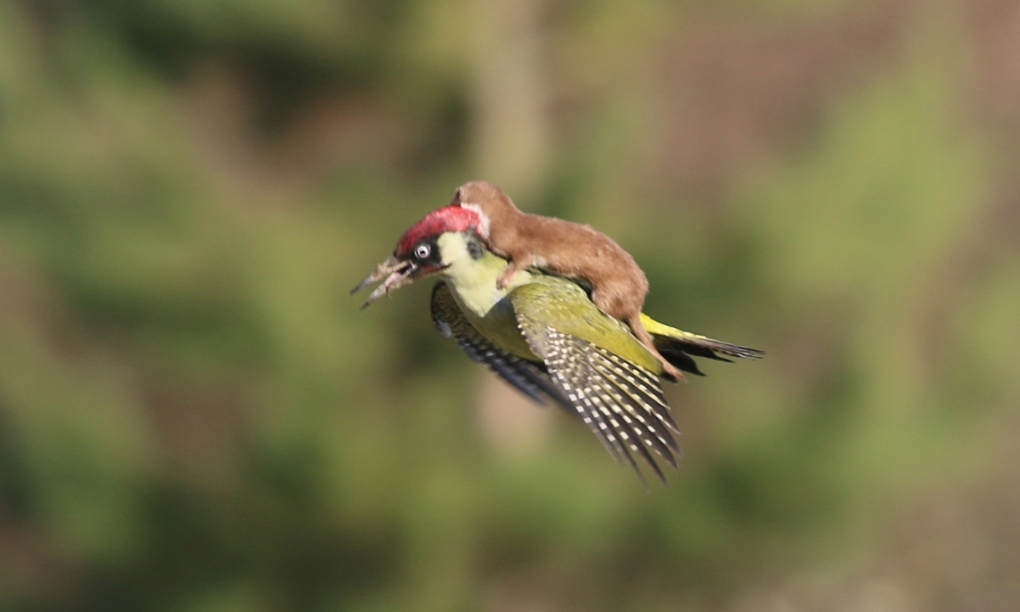
The Guardian has an interesting story following on from the well publicised image of a Kingfisher with a Weasel on its back. I reproduce it here as the image was given away by the photographer, Mr Martin Le-May.

Here is The Guardian story
The photograph in question was made as a result of luck. Being in the right place at the right time with the right equipment to see something that probably has only ever happened a handful of times in all of history (my guess, no way of knowing) is akin to winning the lottery. So, you have the image, you know its rare (if you don't then Google it) and then you give it away by putting it on the internet. The action of a philanthropist or that of a photographer breaking the rules. Some say the amateur photographer has wreaked havoc for the professional, especially in the world of wildlife images. The article tells the story of some of the UK's best wildlife photographers and how cheap images have impacted their lives. Or have they. Some are moving into new areas of the industry, mainly teaching on field trips to places where good photographic opportunities exist. This then is them using their field craft, an often overlooked and difficult tool in the wildlife photographers toolbox. If you know where to find a Long Eared Owl by reference to knowing their habitat preferences etc. then you wont need a guide, but if you don't then you will.
My wildlife photography will never be of much interest to anyone. I enjoy just being there and being part of the countryside to much to sit for long hours in a hide with my eye glued to the eyepiece. When I have done it and the special specimen turns up I am generally so shocked and struck by its rarity or whatever I don't get the shot. Not very professional I am afraid. The few images I have made I enjoyed making but you need more than special equipment (underwater, drones, traps etc.) today to be at the top of the tree (no pun intended). If I were to get the unique shot would I give it away?. Answer I am afraid is No. The same would occur with anything that was unique because we know how wide the market would be. I say "we" thinking of people who know anything about photography as a business.
If therefore we want to have images that cant be taken by the iPhone we need to be working on projects that exclude the millions who can. After making a list the one that stands out as the most promising is the one that is the most satisfying is Fine Art Photography. It can be achieved with the iPhone but the more esoteric work certainly cannot. Is it time for the Fine Art Photographer to batten down the hatches, learn new methods and post processing techniques and keep them hidden. If you develop a new workflow that needs 6 cameras, a laser and a ton of cement, keep it hidden. I don't suppose BMW tell Ford how they make their engines and I don't suppose Chelsea tell Manchester United how they will organise themselves before their next game of football. Maybe the internet, the all knowing blogger and You Tube have made the knowledge too widely available and the lucky along with the savvy have now caught up. Photography is no longer a artisan activity. There are no chemicals (well I know there are some but here I am looking at a general view), no darkened room, no black cloths. In fact looking back the whole process was almost witchcraft with all the perceived attachments.
Fine Art work can be commercial and if any of us want to make some money then we have to be careful. I know there would be an instant roar of disapproval if I were to write this on the OCA website. Money, Commercialisation, Commodification of art is seen as an anathema to the academic world, but that is mostly from those who have achieved status and a good income from academia rather than those at the front line of making art for a living.
Here is The Guardian story
The photograph in question was made as a result of luck. Being in the right place at the right time with the right equipment to see something that probably has only ever happened a handful of times in all of history (my guess, no way of knowing) is akin to winning the lottery. So, you have the image, you know its rare (if you don't then Google it) and then you give it away by putting it on the internet. The action of a philanthropist or that of a photographer breaking the rules. Some say the amateur photographer has wreaked havoc for the professional, especially in the world of wildlife images. The article tells the story of some of the UK's best wildlife photographers and how cheap images have impacted their lives. Or have they. Some are moving into new areas of the industry, mainly teaching on field trips to places where good photographic opportunities exist. This then is them using their field craft, an often overlooked and difficult tool in the wildlife photographers toolbox. If you know where to find a Long Eared Owl by reference to knowing their habitat preferences etc. then you wont need a guide, but if you don't then you will.
My wildlife photography will never be of much interest to anyone. I enjoy just being there and being part of the countryside to much to sit for long hours in a hide with my eye glued to the eyepiece. When I have done it and the special specimen turns up I am generally so shocked and struck by its rarity or whatever I don't get the shot. Not very professional I am afraid. The few images I have made I enjoyed making but you need more than special equipment (underwater, drones, traps etc.) today to be at the top of the tree (no pun intended). If I were to get the unique shot would I give it away?. Answer I am afraid is No. The same would occur with anything that was unique because we know how wide the market would be. I say "we" thinking of people who know anything about photography as a business.
If therefore we want to have images that cant be taken by the iPhone we need to be working on projects that exclude the millions who can. After making a list the one that stands out as the most promising is the one that is the most satisfying is Fine Art Photography. It can be achieved with the iPhone but the more esoteric work certainly cannot. Is it time for the Fine Art Photographer to batten down the hatches, learn new methods and post processing techniques and keep them hidden. If you develop a new workflow that needs 6 cameras, a laser and a ton of cement, keep it hidden. I don't suppose BMW tell Ford how they make their engines and I don't suppose Chelsea tell Manchester United how they will organise themselves before their next game of football. Maybe the internet, the all knowing blogger and You Tube have made the knowledge too widely available and the lucky along with the savvy have now caught up. Photography is no longer a artisan activity. There are no chemicals (well I know there are some but here I am looking at a general view), no darkened room, no black cloths. In fact looking back the whole process was almost witchcraft with all the perceived attachments.
Fine Art work can be commercial and if any of us want to make some money then we have to be careful. I know there would be an instant roar of disapproval if I were to write this on the OCA website. Money, Commercialisation, Commodification of art is seen as an anathema to the academic world, but that is mostly from those who have achieved status and a good income from academia rather than those at the front line of making art for a living.
Subscribe to:
Posts (Atom)